No FOG, no CLOG – Keep our Sewers Clean
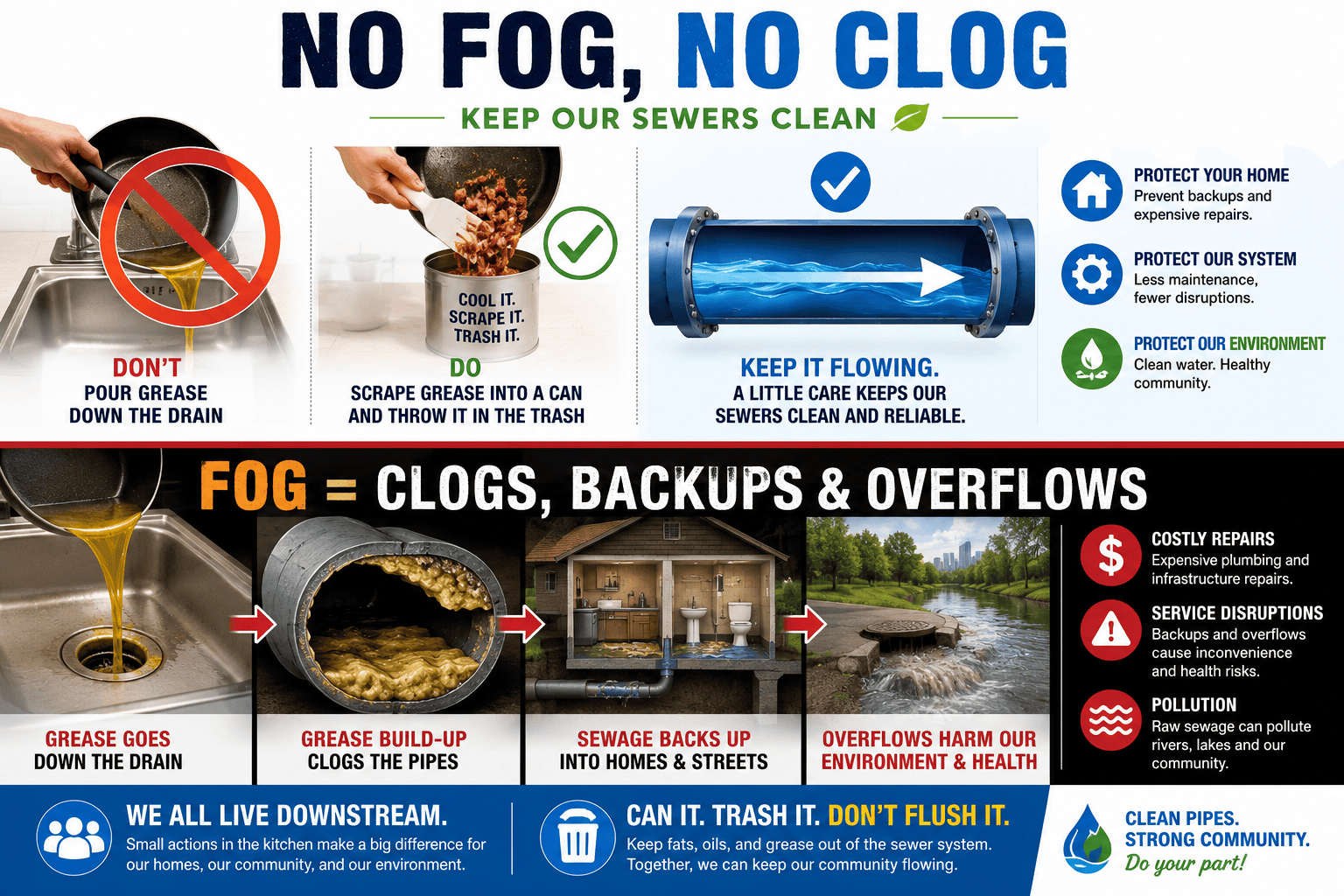
Fats, Oils, and Grease (FOG) are the leading cause of sewer backups and overflows. When poured down drains, liquid FOG cools and solidifies, attaching to pipe walls. Over time, these blockages trap other debris, causing untreated sewage to back up into homes or spill into the environment.
Why FOG is a Problem
- Home Plumbing: FOG can build up in household pipes, leading to slow drains, backups and expensive internal plumbing repairs.
- Sewer System Infrastructure: FOG hardens in sewer lines, reducing pipe capacity and placing extra wear and tear on pumps. This leads to extra maintenance costs and service interruptions.
- Environmental Impact: Sewer overflows can release raw sewage into waterways, streets, and surrounding environments, harming wildlife, degrading water quality, and creating public health hazards.
Common FOG Culprits
FOG comes from everyday cooking byproducts, including:
- Cooking oils from plants and seeds and vegetable shortening
- Animal fats such as lard, meat drippings, and bacon grease
- Dairy products such as butter, margarine, and cream
- Sauces, gravies, dressings, and food scraps
How to Prevent Sewer Issues
- Never pour fats, oils, or grease down the sink, toilet, or garbage disposal.
- Allow hot grease to cool and solidify, then scrape it into an empty can, jar, or plastic bag to throw it in the regular trash.
- Wipe greasy and oily pots, pans, dishes, and utensils with a paper towel before washing them.
- Utilize sink strainers or baskets to capture food particles and other solid waste, and empty them in the trash rather than washing them down the drain or using the garbage disposal.
Help Spread the Word
Speak with friends and neighbors about keeping fats, oils, and grease out of the sewer system. The sewer lines are shared across neighborhoods and can affect everyone in the community.
FAQ
- Can FOG blockages be cleared by pouring hot water down the drain?
-
- No, once fats, oils, and grease are down the drain, hot water will not remove them. Instead, they are carried deeper into the pipes where they recool, solidify and build up, creating a larger blockage further down the system.
- Will pouring dish soap down the drain clear FOG?
-
- No, soap will quickly lose its effectiveness while the fats, oils, and grease remain in the pipes where they can solidify and accumulate.
- Will just a little bit of fats, oils, and grease down the drain cause a problem?
-
- Yes, even small amounts of FOG will build up over time and can lead to large and costly problems.
Rags – The “Flushable” myth
Rags for wastewater technicians are any fibrous, non-biodegradable material that gets flushed into the sewer system. This includes wet wipes, paper towels, disposable gloves, and feminine hygiene products. These objects don’t dissolve and are hazardous to the sewer infrastructure. They can clump together and form blockages. They can damage the impellers in sewer lift stations, cause motors to burn out, and cause tens of thousands of dollars in damage.
Your assistance in keeping these items out of the sewer system can help reduce maintenance expenses. Please place these items in the garbage and don’t flush them down the sewer system.
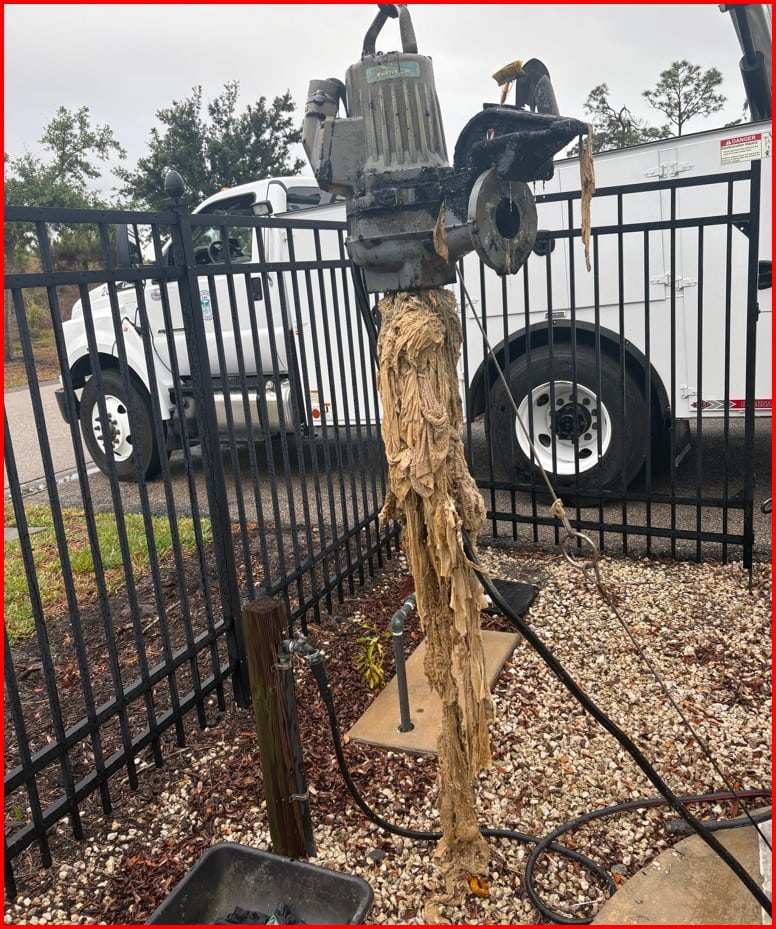
Rags pulled from a lift station.
Collection Centers
Charlotte County:
West Charlotte Recycling Facility
7070 Environmental Way, Port Charlotte, FL 33981
8:00 a.m. to 3:45 p.m. Tuesday through Saturday
Proof of county residency is required
Sarasota County:
Chemical Collection Center (South)
250 S Jackson Road, Venice, FL 34292
8:00 a.m. to 4:00 p.m. Monday through Saturday
Proof of county residency is required
References
- https://www.scgov.net/home/showpublisheddocument/55466/63786558874447000
- https://www.scgov.net/government/public-utilities/utility-engineering/asset-management/fats-oils-and-grease-fog-program
- https://www.scgov.net/government/solid-waste
- https://www.charlottecountyfl.gov/core/fileparse.php/523/urlt/fog-trifold-residential.pdf
- https://www.charlottecountyfl.gov/departments/utilities/sewer-service/fog-program.stml
- https://www.charlottecountyfl.gov/departments/public-works/solid-waste/recycling-facilities.stml
- https://https://www.flsenate.gov/Laws/Statutes/2023/Chapter403/All
- https://floridadep.gov/water/domestic-wastewater
- https://www.miamidade.gov/global/news-item.page?Mduid_news=news1511271033666674
